
Something Interesting Is Happening in Work
From the Built to Endure series
Something interesting is happening in work right now.
For the first time in a long time, many people are quietly reconsidering what work is actually for. Not the practical mechanics of it — the meetings, the systems, the endless flow of tasks — but the deeper question beneath all of that. Where do I actually create value? What is the thing I naturally bring to the work I do?
It’s a subtle shift, but an important one.
Because at the same time that this question is emerging, the tools available to do work have never been more powerful. There are more systems, more platforms, and more ways to organize effort and generate output than at any other point in history. Entire industries have been built around improving productivity and helping people work faster and more efficiently.
In many ways, this progress has delivered exactly what it promised.
And yet, if you listen closely to how people talk about their careers, you begin to hear a different story emerging beneath the surface. Many people are working hard and producing results, but still feel uncertain about where they truly fit.
This uncertainty is rarely about capability. Most people know they are able to do the work in front of them. They can learn the systems, adapt to new tools, and perform the responsibilities of the role.
The question that lingers is something quieter.
Where do I actually contribute?
For much of the last century, work was organized around a relatively simple assumption: people were largely interchangeable. Roles were defined first, and individuals were expected to adapt themselves to the structure of the role. This model made perfect sense in an industrial economy where consistency and repeatability were essential. Factories required predictable processes, and organizations needed systems that could scale.
Efficiency depended on predictability.
But the nature of work has changed.
Much of what people do today involves interpretation rather than repetition. It requires judgment, pattern recognition, and the ability to make sense of complex information. In these environments, two people can sit in the same meeting, hear the same information, and walk away with completely different insights.
One person might immediately see a pattern that others miss. Another might sense that something in the plan isn’t quite aligned. Someone else may have an instinctive ability to bring clarity to conversations that have become tangled in competing perspectives.
We often describe these differences as personality or working style. But when you observe them over time, they begin to look less like preferences and more like patterns.
People tend to contribute in very specific ways.
Some naturally bring direction and vision. Others bring stability and consistency. Some instinctively challenge assumptions, while others excel at integrating ideas and bringing people together. These tendencies often repeat across someone’s entire career. Even when industries change or job titles evolve, the underlying contribution tends to remain remarkably consistent.
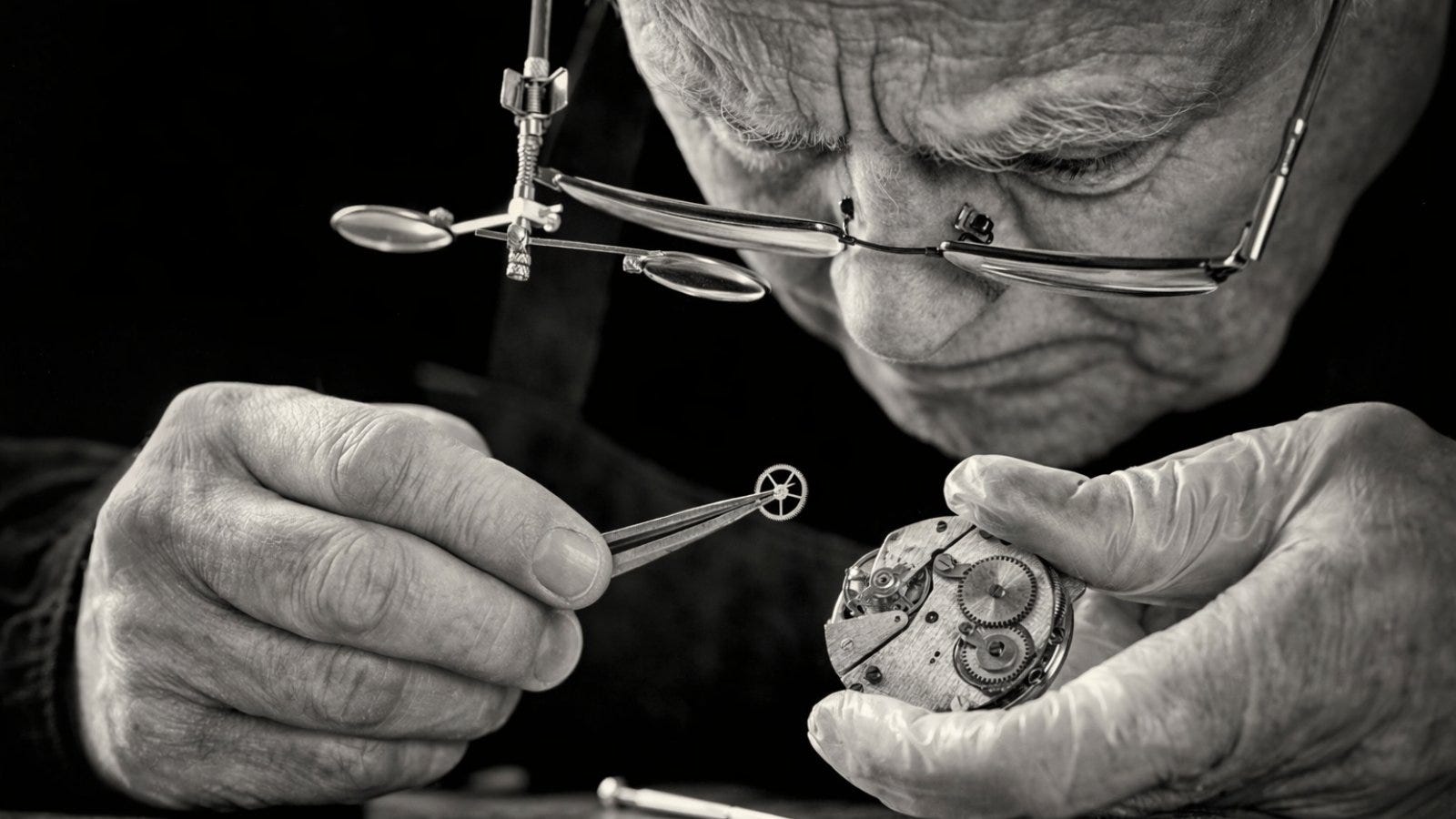
This is something craftsmen have always understood.
In traditional craftsmanship, the goal is not simply to produce something quickly. The goal is to produce something well — something shaped by the unique skill, judgment, and care of the person making it. Two craftspeople can use the same materials and tools, yet the finished work still carries the unmistakable signature of the person who made it.
Human contribution in modern work may operate in a similar way.
But most modern systems are not designed to recognize this kind of contribution. They are designed to measure output.
Output is visible. It can be tracked, quantified, and evaluated. Contribution is more subtle. It appears through how someone thinks, how they interpret complexity, and how they influence the direction of the work around them.
This may help explain why so many capable people experience a quiet friction in their work. Not burnout in the dramatic sense, but a more subtle sense of misalignment. They can perform the role and meet expectations. In many cases, they can even succeed within the system. But the work does not fully engage the way they naturally think or contribute.
Over time, that disconnect creates a steady drain on energy and clarity.
What makes this moment particularly interesting is that it arrives at a time when the tools around us are becoming more powerful and more flexible than ever before. Entire conversations about the future of work revolve around what these tools will make possible.
But beneath those conversations, a deeper question is beginning to surface.
If tools can increasingly generate output, what does meaningful human contribution actually look like?
I have begun to think about this through a concept I call Design Intelligence.
Design Intelligence is not intelligence in the traditional sense. It is not about IQ, knowledge, or technical expertise. Instead, it is the ability to understand how a person is naturally structured to contribute their best work.
Every individual processes information differently. Some people instinctively look for inconsistencies and structural flaws. Others naturally see patterns and long-term direction. Some bring movement and momentum, while others stabilize systems and ensure that ideas can actually be implemented.
These differences are often subtle, but they are remarkably consistent over time.
When someone’s work aligns with this deeper structure, something noticeable happens. Decision-making becomes clearer. Energy stabilizes. The work begins to feel less like effort and more like expression.
Not because the work itself is easier, but because it fits the person doing it.
This perspective quietly challenges one of the foundational assumptions of modern organizations — that talent can be fully understood through skills, training, and performance metrics alone. Skills can certainly be developed, and experience matters enormously. But the underlying way a person processes complexity and contributes insight appears to follow a more enduring pattern.
When work aligns with that pattern, contribution becomes sustainable. And sustainability is ultimately what allows work to endure.
As the systems and tools around us continue to evolve, this distinction may become increasingly important. Output will almost certainly become easier to generate, and efficiency will continue to improve in ways that are difficult to fully imagine today. But the question of human contribution will only become more interesting.
Because when the mechanisms of production become widely available, the work that truly stands out rarely comes from speed or scale alone. It tends to come from people who understand how they are designed to contribute, and who shape their work around that understanding.
Work created from that place carries a different quality. It feels more deliberate, more grounded, and more consistent over time. Not simply productive in the moment, but thoughtfully constructed in a way that allows it to hold value well beyond the circumstances that produced it.
And that may be the deeper shift beginning to take place in work right now.
People are beginning to look past the mechanics of productivity and ask a more fundamental question about contribution. They are starting to notice that the work that feels most meaningful — and often the work that creates the most enduring value — tends to emerge when someone is operating in alignment with how they are naturally designed to think, decide, and contribute.
Which brings us back to where we began.
Something interesting really is happening in work right now.
And it may have less to do with the tools we use than with a deeper understanding of the people using them.
— Wendy Tepley
Success Code Consulting